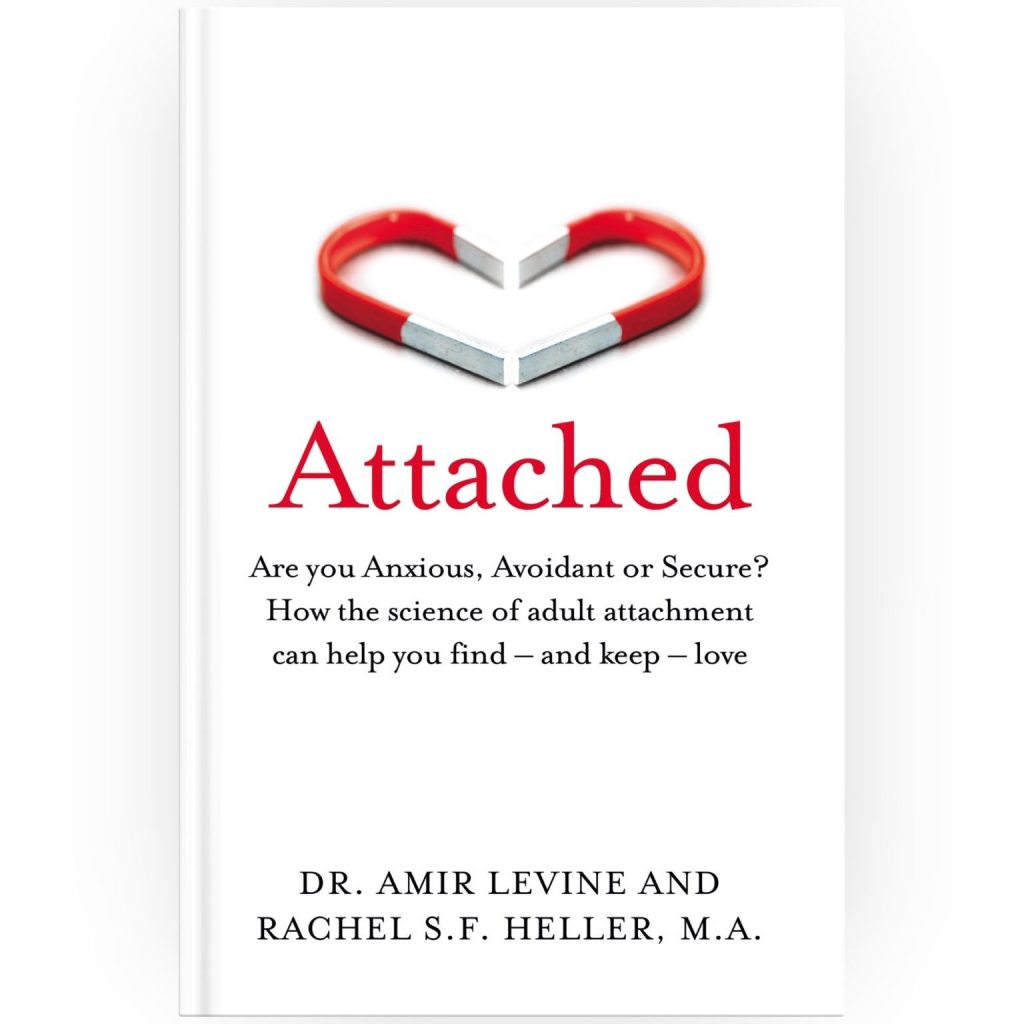
Dr. Amir Levine and Rachel S.F. Heller, M.A.
Attached – Are you Anxious, Avoidant or Secure? How the science of adult attachment can help you find – and keep – love
Psychiatrist and neuroscientist Levine and psychologist Heller explain why we often tend to fall into unhealthy relationship dynamics and how this can be explained by our “attachment style.” Those are relationship patterns we have learned as children in the interaction with our parents and that we often continue to use later in life. The book introduces the three styles (anxious, avoidant, and secure; newer research also presents a fourth style: anxious-avoidant) and teaches how to identify your own. Well-researched and practical, with many examples and tests, this book is crucial to improving relationships.
“Say you decide to follow the advice of many popular relationship books, They offer guidelines to help you “land” a partner, such as: Don’t make yourself too available, say you’re busy even when you’re not, don’t call him – wait for him to call you, don’t appear to care too much, act mysterious. Presumably, you preserve your dignity and independence in this way and gain your partners respect. But in fact, what you are doing is behaving in a way that is not true to your genuine needs and feeling. You wave these aside to appear strong and self-sufficient. And indeed, these books and the advice they give are right; these behaviors may indeed make you seem more attractive. What they don’t mention, because they are unaware of attachment science, is that they will make you seem more attractive to a very particular kind of partner – an avoidant one. Why? Because, in essence, what they are advocating is that you ignore your needs and let the other person determine the amount of closeness/distance in a relationship. The avoidant person can have his/her cake and eat it too, so to speak – s/he can enjoy the thrill and closeness you naturally project when you are together without having to consider your needs for intimacy and togetherness the rest of the time. By being someone you’re not, you’re allowing another to be with you on his or her own terms and come and go as s/he pleases.”
 Maria Knodt