Ibram X. Kendi
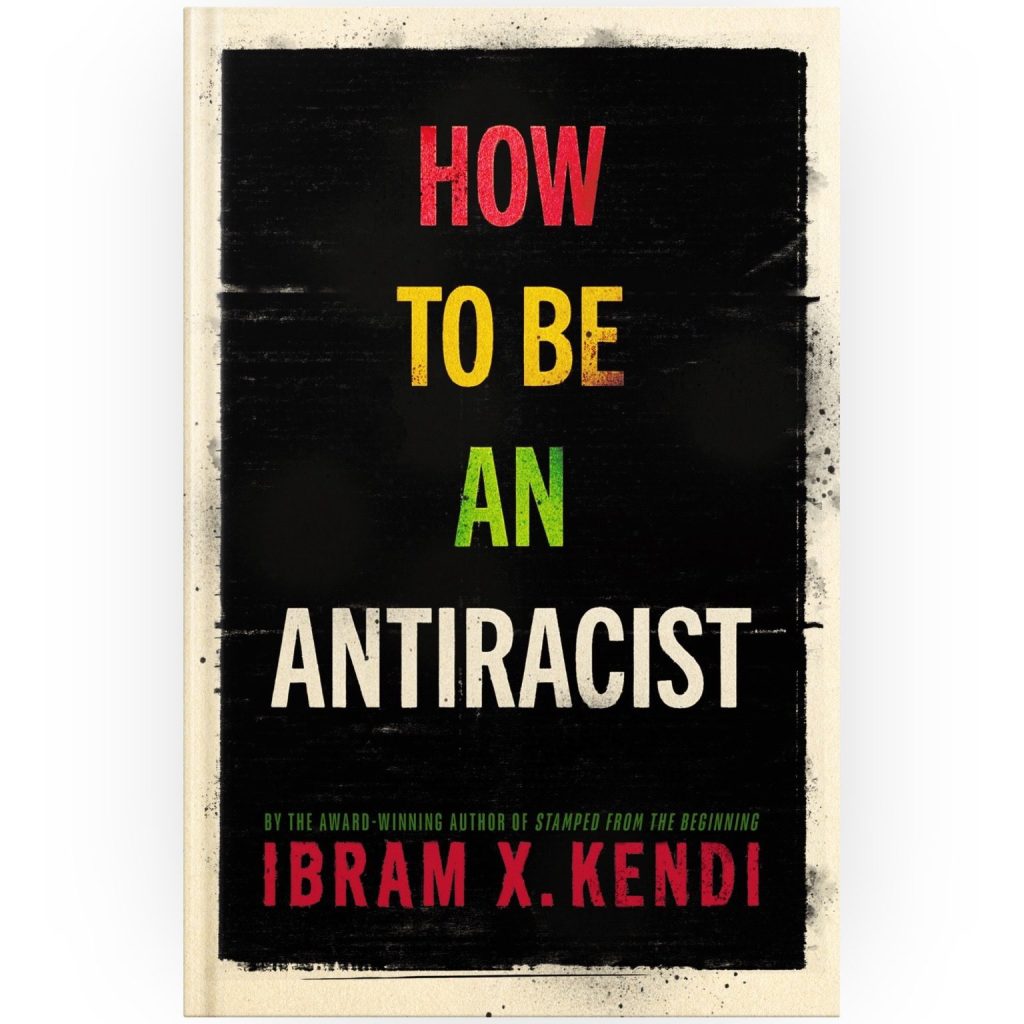
How To Be An Antiracist
Do you remember the killing of George Floyd in 2020, the Black Lives Matter movement, and how many of us posted about it and promised ourselves that we want to be better allies? Well, even if it is not viral on social media anymore, this need is as vital as ever. The American author, professor, antiracist activist, and historian Ibram X. Kendi explains in this book why it is not enough to be ‘not racist’ but that we must become antiracist. He explains that we are all sometimes helping the structures of racism to flourish. Therefore, it is crucial to detect these behaviors and change them. We have to become active in fostering antiracism; otherwise, we will passively support racism!
“Denial is the heartbeat of racism, beating across ideologies, races, and nations. It is beating within us. Many of us who strongly call out Trump’s racist ideas will strongly deny our own. How often do we become reflexively defensive when someone calls something we’ve done or said racist? How many of us would agree with this statement: “‘Racist’ isn’t a descriptive word. It’s a pejorative word. It is equivalent to saying, ‘I don’t like you.’” These are actually the words of White supremacist Richard Spencer, who, like Trump, identifies as “not racist.” How many of us who despise the Trumps, and White supremacists of the world share their self-definition of “not racist”?
What’s the problem with being “not racist”? It is a claim that signifies neutrality: “I am not a racist, but neither am I aggressively against racism.” But there is no neutrality in the racism struggle. The opposite of “racist” isn’t “not racist.” It is “anti-racist.” What’s the difference? One endorses either the idea of a racial hierarchy as a racist, or racial equality as an antiracist. One either believes problems are rooted in groups of people, as a racist, or locates the roots of problems in power and policies, as an anti-racist. One either allows racial inequalities to persevere, as a racist, or confronts racial inequalities, as an antiracist. There is no in-between safe space of “not racist.” The claim of “not racist” neutrality is a mask for racism. This may seem harsh, but it’s important at the outset that we apply one of the core principles of antiracism, which is to return the word “racist” itself back to its proper usage. “Racist” is not – as Richard Spencer argues – a pejorative. It is not the worst word in the English language; it is not the equivalent of a slur. It is descriptive, and the only way to undo racism is to consistently identify and describe it – and then dismantle it. The attempt to turn this usefully descriptive term into an almost unusable slur is, of course, designed to do the opposite; to freeze us into inaction.”
 Maria Knodt